Category: NYC Mayors

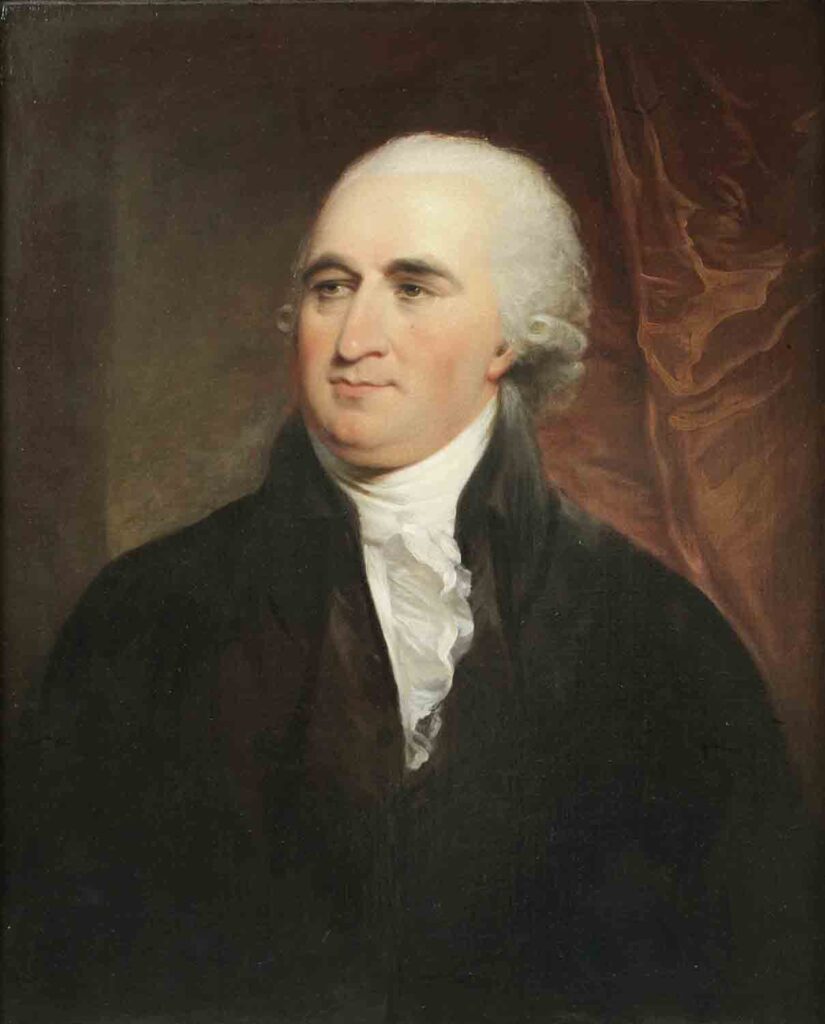
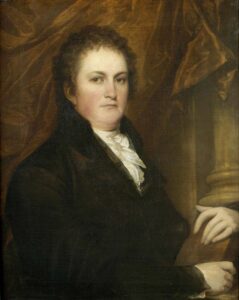
DeWitt Clinton: 48th, 50th, & 52nd

DeWitt Clinton by John Trumbull, 1805, NYC City Hall Portrait Collection

DeWitt Clinton, Mayor 1803-1807, 1808-1810, 1811-1815: Clinton (1769 – 1828) also served as governor of New York and a candidate for president in 1812. In 1819, Clinton married Catharine Jones, a granddaughter of Edward Livingston.

Census records reveal that Clinton was an enslaver. The 1800 and 1810 censuses list Clinton with one enslaved person in his household in New Town, Queens. The 1820 Census records Clinton having one male and one female freeperson between the ages twenty-six and forty-five in his household in Albany. It is likely they were formerly enslaved and now indentured under the 1799 law.[1]

  • When DeWitt was eight years old, his father James wrote to his wife Mary that DeWitt should “prevent the Negroes from becoming Intirely idle.”[2]
  • In 1805, Clinton applied for reimbursement from the New York State Comptroller for the abandoned enslaved girl Jenny. Abandoned children of enslaved mothers were supported at the state’s expense by the local overseers of the poor. Jenny was abandoned by the estate of Beverley Robinson. It appears he was reimbursed $252.[3]
  • On December 4, 1810, Clinton manumitted “Massa, 31 (mulatto).”[4]
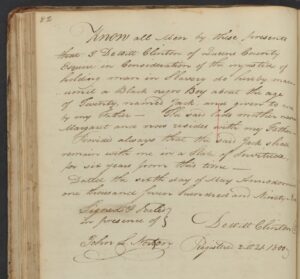
Manumission document for Jack, May 6, 1799

“DeWitt Clinton, then a member of the New York State Assembly, soon to be mayor of New York City and eventually governor of the state, manumitted a 20-year-old man named Jack in 1799 by declaring that ‘the injustice of holding men in slavery’ had inspired him. Clinton nevertheless put off Jack’s release by six years.” From the original document: “…I, DeWitt Clinton of Queens County Esquire in consideration of the injustice of holding man in Slavery do hereby manumit a Black negro Boy about the age of Twenty, named Jack, and given to me by my Father. The said lad’s mother named Margaret and now resides with my Father. Provides always that the said Jack shall remain with me in a State of Servitude for six years from this time. Dated the Sixth of May…” 1799.[5]

[1] Northeast Slavery Records Index, citing 1800 Census; FamilySearch, 1810 Census and 1820 Census

[2] The Birth of Empire, p.14

[3] Northeast Slavery Records Index, citing Comptroller’s Record of Abandonment

[4] Northeast Slavery Records Index, citing Yoshpe, “Record of Slave Manumissions, p.80

[5] Register of Manumissions of Slaves, 1785-1809, by the Society for Promoting the Manumission of Slaves, Museum of the City of New York, digital edition; Smithsonian Magazine, Carolyn Eastman, September/October 2024, article, based on digital collection of Museum of City of New York

Copyright 2025 Paul Hortenstine
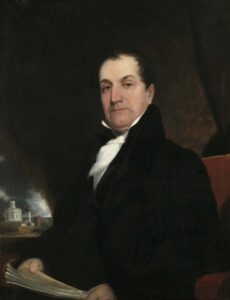
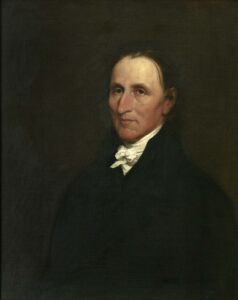
Walter Bowne: 60th

Walter Bowne by Robert Walter Weir, 1833, NYC City Hall Portrait Collection

Walter Bowne, Mayor 1829-1833: Bowne (1770–1846) was a descendant of John Bowne, who established religious freedom for Quakers in Flushing. His house, built in 1661, is a museum today. John Bowne was a enslaver but later generations used the house for the Underground Railroad.

It is unclear if Walter Bowne was an enslaver, but he did have freepersons in his household until at least 1830 that were likely indentured servants. Additionally, his wife’s letters mention servants in 1803, who could have been freepersons. A woman freeperson in his household in New York City was born between 1776 and 1794. There was also a male freeperson born between 1807 and 1820 in his household in 1830.

Bowne does not have enslaved people in his home in the jury ward census of 1819 but does have freepersons in his household in New York City in 1820 and 1830. In the 1820 census, there is one female of twenty-six and under forty-five in the category of “free colored persons.” In the 1830 census, there are two “free colored persons” in his household, a male between ten and twenty-three and a woman between thirty-six and fifty-four.[1]

He is listed as owning lots in Ward 6 of New York City in the 1799 tax assessment. He does not appear in the 1800 census.[2]

He is listed in the 1840 Census as “Walters Bowen:” “free Colored person, Male 10-23, female, 36-55[3]

[1] NYC Directory; New York Jury Ward Census; Census, New York Ward 2, 1810 and 1820 census, as “Waller Bowne” in 1820 census; A girl’s life eighty years ago; selections from the letters of Eliza Southgate Bowne, online; Ancestry.com, census records

[2] New York, U.S., Tax Assessment Rolls of Real and Personal Estates, 1799-1804, Ancestry.com

[3] New York Ward 2, 1840 Census, Ancestry.com

Copyright 2025 Paul Hortenstine

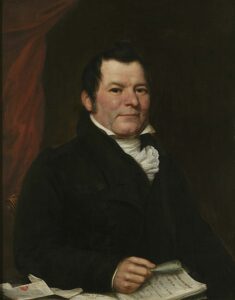
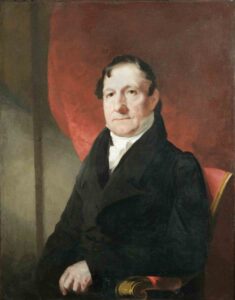
Stephen Allen: 56th

Stephen Allen by Samuel Lovett Waldo, 1824, NYC City Hall Portrait Collection

Stephen Allen, Mayor 1821-1824: Allen (1767 – 1852) was a wealthy sailmaker and had one enslaved person in his household in the 1810 census. He supported the colonization of slaves. He was orphaned during the Revolutionary War and his memoirs are in the New York Public Library.

From the book on working class New York, Chants Democratic: “Near the dry docks, Stephen Allen, the sailmaker, cleared by his own estimate $100,000 between 1802 and 1825, largely because of his early success in bypassing the city’s ship chandlers to purchase his materials directly from the wholesalers. By the time Allen retired, at age fifty-eight, his financial interests and his reputation had won him a career in politics and seats on the boards of two banks and two insurance companies.”[1]

The only Stephen Allen in New York City in 1810 has one enslaved person and one free person in his household in New York City in the census. It is likely this free person was an indentured servant.

  • 1810 census, one enslaved person, one freeperson, and eleven household members.[2]
  • 1816 jury census: Allen is listed as a sailmaker and has no enslaved persons or “colored inhabitants” in the household at 73 Bowery. There are fifteen inhabitants.[3]
  • 1819 jury census: Allen,47, is listed as sailmaker and has no enslaved persons or “colored inhabitants” in the household. There are twelve inhabitants of the household.[4]
  • 1830 Census: Stephen Allin, 1 “free colored person.”[5]
  • 1840: male between 24 and 36 “free colored person.”[6]

[1] Chants Democratic, p.37

[2] Year: 1810; Census Place: New York Ward 4, New York, New York; Roll: 32, FamilySearch

[3] NYC Archives, Jury Ward Census, 1816, Volume 6, Ward 10, 73 Bowery

[4] NYC Archives, Jury Ward Census, Volume 15, Ward 10, 71 Bowery

[5] 1830 directory: Stephen Allen, merchant, 186 Front, house 71 Bowery, NYPL, 1829-1830 directory, p.58, link; 1830-1831 directory, p.96, link; 1830 Census search, Ancestry.com, New York Ward 10

[6] 1840 Census search, Ancestry.com, New York Ward 15

Copyright 2025 Paul Hortenstine

Marinus Willett: 49th

Marinus Willet by John Trumbull, 1808, NYC City Hall Portrait Collection

Marinus Willett, Mayor 1807-1808: Willett (1740 –1830) was a member of the Sons of Liberty and an enslaver.

  • In the 1790 and 1800 Censuses, he had one enslaved person in his household in New York City.[1]
  • In the 1810 Census, two enslaved persons in his household in New York City.[2]
  • In the 1820 Census, he has three enslaved men in his household in New York City and none in his household in Schenectady.[3]

[1] FamilySearch, East Ward NYC, 1790 Census and 1800 Census

[2] Northeast Slavery Records Index

[3] NYC Ward 10, Schenectady Ward 2, 1820 Census, FamilySearch

Copyright 2025 Paul Hortenstine

James Duane: 45th

James Duane by John Trumbull, 1805, NYC City Hall Portrait Collection

James Duane, Mayor 1784-1789: Duane (1733 – 1797) is considered a founder and attended the Continental Congress. He is also one of the founders of the New York Manumission Society and an enslaver. Duane also owned significant portions of land in Vermont and created the township of Duanesburgh in 1794. He and his family moved from the city to a farm there in 1794.

In 1789, Duane’s taxable wealth was $8,125. At that time, taxable wealth was real and personal property recorded on assessment lists. For the five years Duane held office, his annual income was about $2,000. At that time, the mayor “was not paid a salary, but was instead permitted to personally collect most of the licenses and fees paid to the city, an extremely lucrative source of income.”[1]

  • In the 1790 census, Duane is listed as having one enslaved person in his household in New York City.
  • In November 1792, Duane bought Dan, (Daun), age 25, from Melanchton Smith for thirty pounds on the condition that Dan be manumitted in five years.
  • In 1794, James Duane bought an enslaved woman, age 32, and from Henry Putnam. Her two young children were also enslaved. An entry in his journal is to the effect that “‘he promised her in case of good behavior to free her in twelve years and her son at twenty-eight years.’ The Judge [Duane] had no scruples about separating a slave mother from her child, for less than a year later he sold the mother along with a two months’ old female child, which had been born in the interim, for £40 to a Mr. Sam Thorpe upon condition that the mother be released at the end of ten years and the female child at the age of twenty-eight. The Judge retained the son with the intention of himself manumitting him at the promised age.”
  • Duane’s enslaved man Sam broke into a house and stole some sugar, for which he received fifteen lashes.[2]

Duane’s wife, Mary Livingston (1738–1821), was from the prominent Livingston family and a direct descendant of major slave traders. Her grandfather, Philip Livingston (1686 – 1749), and father, Robert (1708–1790), were investors in multiple slave ships. Robert was Duane’s guardian and Duane and his wife were married at Livingston Manor, where they spent a great deal of time. When his wife inherited two enslaved persons from her father, Duane manumitted them: “When Mrs. Duane’s father’s personal estate was divided among his heirs in August, 1791, ‘two black servants’ valued at £5-15-0 fell to Mrs. Duane’s lot and were quickly manumitted.”[3]

[1] Democratic Dividends: Stockholding, Wealth and Politics in New York, 1791-1826, Eric Hilt and Jacqueline Valetine, NBER Working Paper, link

[2] Douma, Michael. “Prices of Enslaved Persons in New York and New Jersey.” Journal of Slavery and Data Preservation 4, no. 5 (2023): 67-75; census: New York City North Ward, New York, New York; James Duane: Revolutionary Conservative, Alexander, Edward P., 2019 digital edition, p.186, 215-220, 231; Arthur Alexander, “”Federal Officeholders in New York State as Slaveholders, 1789-1805″” The Journal of Negro History, (1943), Vol. 28, No. 3, p.336, on JSTOR

[3] Arthur Alexander, “Federal Officeholders in New York State as Slaveholders, 1789-1805” The Journal of Negro History, (1943), Vol. 28, No. 3, p.336, on JSTOR; James Duane: Revolutionary Conservative, Alexander, Edward P., 2019 digital edition, p.186, 215-220, 231; Northeast Slavery Records Index

Copyright 2025 Paul Hortenstine

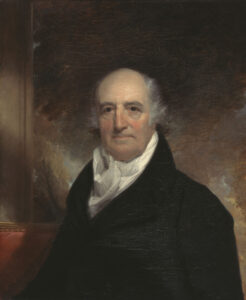
Richard Varick: 46th

Richard Varick by Henry Inman, 1829, Albany Institute of History & Art

Richard Varick, Mayor 1789-1801: Varick (1753 – 1831) served as George Washington’s aide-de-camp and private secretary and has been described as “The Forgotten Founding Father.” Varick manumitted Jenny (or Jin) and Frank in 1810, and Peter Anthony, age 32, in 1812.[1]

Census records reveal he had enslaved people in his household in New York City and later in New Jersey: 

  • 1790 Census: East Ward: one enslaved person.[2]
  • 1800 Census: Ward 1: three enslaved persons.[3]
  • 1810 Census: Richard Varick, Esq., New York Ward 8, four enslaved persons.[4]
  • 1820 Reconstructed Census Records: Bergen County, NJ: one enslaved person.[5]
  • 1830 Census: Richard Varick, Jersey City, Bergen, New Jersey, “Free Colored Persons:2” [6]

Jury Ward Census:

  • 1816: 108 Broadway, Gentleman, Personal Estate of $150, Freeholds of $150, Freeholder of 100 pounds and upwards, Age 63,1 enslaved man, 1 female and 1 male “colored inhabitants not slaves” one male and three females “white inhabitants”[7]
  • 1819: 110 Broadway, Gentleman
  • 1821: 110 Broadway

In 1789, Varick’s taxable wealth was $2,425. At that time, taxable wealth was real and personal property recorded on assessment lists.[8] He left to his wife, Maria, “the remaining term of service of my servant Kingston Tappen…” It is unclear who this servant is, their name does not appear in federal census records around that time.[9]

Varick was married to Maria Roosevelt. Her father, Isaac, was the patrilineal great-great-grandfather of President Franklin Delano Roosevelt. Isaac owned a sugar refinery in New York that imported sugar from plantations that relied on enslaved labor.

[1] Yoshpe, p.91 and New York City Conveyances, 1809–1810, viewer p.489, and 1811-1812, viewer p.618, FamilySearch

[2] 1790 Census search, Ancestry.com

[3] 1800 Census search, Ancestry.com; There is another Richard Varick in Ward 7, but his age is 16-25

[4] 1810 Census search, FamilySearch

[5] 1820 Census search, Ancestry.com

[6] 1830 Census search, Ancestry.com

[7] NYC Archives, Jury Ward Census, 1816, Ward 3, image 16

[8] Democratic Dividends: Stockholding, Wealth and Politics in New York, 1791-1826, Eric Hilt & Jacqueline Valetine, NBER, link

[9] New York County, New York, U.S., Wills and Probate Records, 1658-1880 (NYSA), Probate Date, 13 Sep 1831

Copyright 2025 Paul Hortenstine

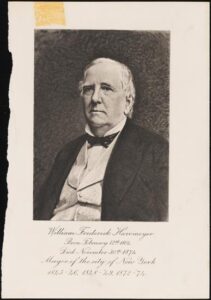
William Havemeyer: 67th, 70th, & 81st

WIlliam Havemeyer, ca. 1860-1890, Museum of the City of New York

William Havemeyer, Mayor 1845-46, 1848-49, and 1873-74: Havemeyer (1804 – 1874) made a fortune from his family sugar refinery and retired from the business in 1842. He headed a refinery on Van Dam Street in lower Manhattan from 1828 to 1842. His father began his own business in 1807, establishing one of the first sugar refineries in New York City. In 1828, he formed a partnership with his cousin, Frederick, under the name of W. F. & F. C. Havemeyer, sugar refiners. In 1842, he sold out his interest in the firm to his brother Albert. The sugar refineries of the Havemeyer family were predecessors to the American Sugar Refining Company, later called the Domino Sugar Corporation, which has the famous building in Williamsburg.

Havemeyer was also the president of the Bank of North America from 1851 to 1861, president of the New York Savings Bank from 1857 to 1861, and vice president of the Long Island Railroad Company and the Pennsylvania Coal Company.

Sugar cane was supplied from the American south, mainly Louisiana, and the West Indies, from the labor of enslaved Africans. Though slavery ended in the United States in 1865, it continued in Cuba, a leading exporter of raw sugar, until 1886, and in Brazil until 1888. Sugar mills were among the earliest factories in North America. Initially operated close to plantations, by the early nineteenth century most were in major commercial centers.

Though Mayor Havemeyer publicly criticized slavery and strongly opposed its expansion, like many New Yorkers he maintained that “no forcible interference” should occur “in states which it already existed.” In 1859, he joined with other wealthy New Yorkers—including William B. Astor, Moses Taylor, and Samuel Tilden—to form the Democratic Vigilant Association, dedicated to opposing Republicans and convincing Southerners that New York merchants could be depended on.[1]

Columbia’s Havemeyer Hall was named after Henry Osborne Havemeyer, one of the third generation of his family to work in sugar refining. He helped create the Sugar Trust and saw its transition into the American Sugar Refining Company in response to 1890 anti-trust laws. Henry and his wife, Louisine, donated a large collection of art that is still on display at The Met.[2]

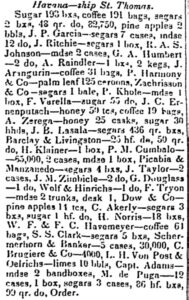
Newspaper accounts of shipments reveal that his company directly imported sugar from Cuba, which had enslaved labor on sugar plantations.

  • March 5, 1828: Forms company and dissolves previous partnership with Frederic C. Havemeyer.[3]
  • 1828 Sugar Imports to New York: Cuba, Permanbuco [Brazil], St. Eustasia, St. Thomas, St. Barts, New Orleans, and “Coastwise.”[4]
  • July 15, 1839: From Havava, barque Rapid: 122 boxes sugar, W.F. & F.C. Havemeyer[5]
  • July 31, 1839: From Havana, the ship St. Thomas: 18 boxes sugar, W.F. & F.C. Havemeyer[6]
  • August 1841: Barque Nile Shaw, from Matanzas [Cuba]: 100 boxes sugar: WF&FC Havemeyer[7]

Importation of sugar from Cuba, Shipping and Commercial List, July 31, 1839

[1] Landmarks Preservation Commission, Sept. 25, 2007; Designation List 396, LP-2268, report; Gotham: A History of New York City to 1898, digital edition, p.861; “Relics of the Domino Sugar Refinery, Frozen in Time and Syrup,” New York Times, Oct. 23, 2013, link

[2] Columbia University, Sugar and Columbia University; The Met, Havemeyer Collection

[3] Commercial Advertiser, Saturday, Mar 08, 1828, Page 1, Genealogy Bank

[4] Shipping and Commercial List, Saturday, Jan 10, 1829, p.4, Genealogy Bank

[5] Shipping and Commercial List, Wednesday, Jul 17, 1839, Page 4, Genealogy Bank

[6] Shipping and Commercial List, Wednesday, Jul 31, 1839, Page: 4, Genealogy Bank

[7] New-York Commercial Advertiser, Friday, Aug 13, 1841; Vol:XLIV, Page:2; Genealogy Bank

Copyright 2025 Paul Hortenstine
Philip Hone: 58th

Phillip Hone by John Vanderlyn, 1827, NYC City Hall Portrait Collection

Philip Hone, Mayor 1826-1827: Hone (1780 – 1851) co-owned an auction house with his brother John that made both tremendously wealthy and Philip retired at age 40. They auctioned cargo that arrived from through the port, including tea. Philip is also known for his extensive diaries.

Hone had free persons in his household in 1816 and 1820 censuses who were likely now indentured servants. Hone had four free persons in his New York City household—two men and two women—and the men were there until at least 1830. One man and woman were born between 1795 and 1806 and the other man and woman between 1776 and 1794.

In February 1809, Philip Hone manumitted an enslaved woman, Charlotte.[1] From the conveyance record

“I Philip Home of the State of New York Do by these presents for good and valuable considerations fully and absolutely manumit make free Y and set at liberty my Black Slave named Charlotte hereby willing and declaring that the said Charlotte shall and may at all time and times hereafter exercise hold and enjoy all and singular the liberties Rights privileges and immunities of a free Woman as fully to all intents and purposes as if she had been born free and I do hereby for myself my Executors administrators and assigns absolutely relinquish and release all my right title and property whatsoever in and to the said Charlotte as a slave.”[2]

Directories of the city list Philip and his brother John as merchants from 1800 onward. Not until the directory of 1811-12 is there a Philip S. Hone who is also a merchant. There is also a Philip J. Hone, who is the mayor’s nephew. Philip S. Hone died sometime in 1818.[3]

  • 1810 Census: three Philip Hones in New York City. None with enslaved persons. The one in Ward 3 that is the future mayor had nine total people in his household, including four “other free persons, except Indians, not taxed”
  • 1816 jury census: no enslaved people, one male and two female “colored inhabitants, not slaves.” There are thirteen people total in the household at 44 Courtland Street.[4]
  • 1820 Census: four “free colored persons.” One male, 14 thru 25; one male, 26 thru 44; one female, 14 thru 25; one female, 26 to 44
  • 1830 Census: two “free colored persons” who are males of 24 and under 36.[5]
  • 1840 Census: New York Ward 15, Philip Hone had “free colored persons:” one male (age 10-23), two males (24-35), and one female (10-23).[6]

1850: In Philip Hone’s household: Moses Price, male, Black, waiter 27 years old.[7]

[1] Northeast Slavery Records Index; Yoshpe, p.84

[2] New York City, New York, United States records, image 70 of 754; New York. County Court (New York County), FamilySearch; Despite there being another Philip Hone during this time period, the evidence points to Mayor Hone manumitting a slave. His brother, John (1764-1832), was an enslaver in the 1800 and 1810 census. He or their father, John (Johan) Philip Hone, was an enslaver in the 1790 census. His brother manumitted a slave named George in 1808.

[3] New York Public Library, digital collections, New York City Directories; New York, U.S., Wills and Probate Records, 1659-1999, Wills, Vol 054, 1816-1818, Philip S. Hone, Probate Date: 15 Jul 1818, Ancestry.com

[4] NYC Archives, New York Jury Census, Volume 3, Ward 3, 1816, link; also a Philip T. Hone, merchant, and Philip Hone, baker; Courtland Street matches city directory

[5] 1810, 1820, and 1830 census from Ancestry.com; Hone listed as in Ward 3 in 1824, link

[6] 1840 Census search, Ancestry.com

[7] 1850 Census search, New York Ward 15 Eastern Half, Ancestry.com

Copyright 2025 Paul Hortenstine
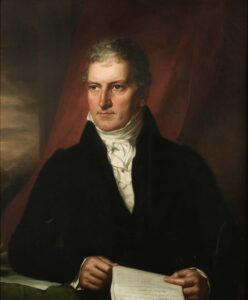
Isaac L. Varian: 64th

Isaac Varian by Edward Ludlow Mooney, 1842, NYC City Hall Portrait Collection

Isaac L. Varian, Mayor 1839-1841: Varian (1793 – 1864) had one enslaved person in his household in New York City in 1820, a woman between fourteen and twenty-five. His family had many by the name of Isaac Varian, including his father and grandfather. It is probable that his father had six enslaved people at their family farm in Yonkers, Westchester County in the 1800 Census. His father died in 1820.[1]

Well-known Black scholar Carter G. Woodson wrote the book Free Negro Heads of Families in the United States in 1830 (published 1925). It identifies Isaac Varian, a male between the ages of 24-36 as one of the “Free Negro Heads of Families” in Harrison, New York, which is in Westchester County. He has five people in his household. This is based on 1830 census records that has Isaac Varian in Harrison with five “free colored persons” and no “free white persons” in the household. The mayor and his father are in New York City in the 1830 census. The 1820, 1840, and 1850 censuses do not have a record of Isaac Varian in Harrison. It appears likely that the 1830 household is owned by Mayor Isaac Varian or his father.[2]

  • Appears to be in Ward 7 in 1830 census. No free people.
  • In New York City, Ward 16 in 1840 census. No free people.
  • In Cortlandt as a farmer in 1850 census.

[1] Northeast Slavery Records Index; FamilySearch, 1820 Census, Issac L. Varian, New York Ward 9; his father is Isaac R. Varian in 1810 Census; New York, U.S., Wills and Probate Records, 1659-1999, letter of administration Probate Date 8 Jun 1820, Probate Place Westchester, Ancestry.com; Listed on Bloomingdale Road in 1819 Jury Ward Census, Ancestry.com

[2] Free Negro Heads of Families in the United States in 1830, Carter G. Woodson, 1925, p.110; 1830 Federal Census, link, Ancestry.com

Copyright 2025 Paul Hortenstine
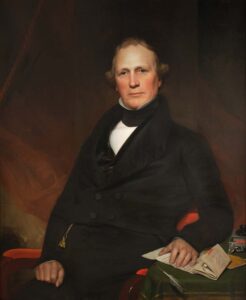
William Paulding, Jr.: 57th & 59th

William Paulding Jr. by Samuel Finley Breese Morse, 1826, NYC City Hall Portrait Collection

William Paulding, Jr., Mayor 1824-1826 and 1827-1829: Paulding (1770 – 1854) was a member of the House of Representatives and built Lyndhurst, the Gothic Revival mansion in Tarrytown. His father, William Sr., was an enslaver but it is unclear if William Jr. was an enslaver but it appears he had free people working as indentured servants in his household under the 1799 Gradual Emancipation Law.

In the 1810 census, Paulding, Jr. had a freeperson in his household in New York City, who was likely an indentured servant. There are two residences for a William Paulding in Westchester in the censuses of 1790, 1800, and 1810. Paulding, Jr. had a woman freeperson in his household in New York City until at least 1830. She was born between 1795 and 1806. There is another woman freeperson in his household in 1819.

  • The house in Greenburgh had two enslaved people in 1790, three in 1800, and two in 1810.
  • There is also a house in Mount Pleasant. In 1790 it had no enslaved persons. In 1800, it had nine household members. In 1810, it had a freeperson in the household. Based on the ages of the inhabitants, this appears to be Paulding, Jr.’s house, but it is unclear because households often had multiple generations and Paulding, Jr. kept a house in New York City. [1]
  • In the 1819 jury census, there are two females in the category of “coloured inhabitants, not slaves” living at his household at 326 Greenwich Street in New York City.[2]
  • In the 1820 census, there is a female “free colored person” of fourteen and under twenty-six living in Paulding, Jr.’s household in New York City.
  • In the 1830 census, there is a female “free colored person” of thirty-six and under fifty-five living in Paulding, Jr.’s household in New York City. The house in Mount Pleasant is also listed, which is Paulding, Jr.’s after the death of his father in 1824.[3]
  • 1840 Census: two “free colored persons:” male and female ages 24-35[4]

[1] Northeast Slavery Records Index: Index does not have 1790 census; Paulding, Jr. does not appear in the Washington Post database; 1790 and 1800 Federal Census records for Westchester County, Ancestry.com

[2] NYC Archives, Jury Ward Census, 1819, Volume 10, Ward 5, 1819, image p.118

[3] 1820 and 1830 Census search, Ancestry.com

[4]1840 Census search,  New York City, Ward 5, Ancestry.com

Copyright 2025 Paul Hortenstine