The Northeast Slavery Records Index (NESRI) is an online searchable compilation of records that identify individual enslaved persons and enslavers in the states of New York, Maine, New Hampshire, Vermont, Massachusetts, Rhode Island, Connecticut,  New Jersey and Pennsylvania. Click below to see our complete collections for each state:

New YorkMaineNew HampshireVermontMassachusettsRhode IslandConnecticutNew JerseyPennsylvania

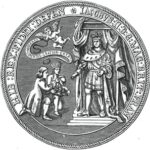
Seal of the Dominion of New England (1686)

NESRI indexes census records, slave trade transactions, cemetery records, birth certifications, manumissions, ship inventories, newspaper accounts, private narratives, legal documents and many other sources. The goal is to deepen the understanding of slavery in the northeast United States by bringing together information that until now has been largely disconnected and difficult to access. This allows for searches that combine records from all indexed sources based on parameters such as the name of an owner, a place name, and date ranges.

NESRI also serves communities seeking to understand their histories of enslavement. Our Community-Locality Reports present enslavement records for a state, county, town or city.  While our collection of records is never complete and always growing,  our customized report provides a head start in the local research process, identifying records that might otherwise take months or years to locate. 

45 NYC Mayors Were Enslavers or Slavery Investors

A new research study by Paul Hortenstine and published by NESRI http://nesri.us/nycmayors reveals that over 88% of New York City’s mayors or acting mayors were enslavers or investors in the slave trade between 1665 and 1827.

Completed in 2025 as New York City celebrated its 400th anniversary, the study focuses on the period from 1665 to 1827, i.e. from when New Amsterdam became New York City until New York State abolished slavery.  However, Hortenstine notes that slavery was interwoven with political power from the city’s earliest days in 1625 under the Dutch and continued even after official emancipation.

From 1665 to 1827, there were 49 mayors or acting mayors: 43 were enslavers or investors in the slave trade. Two additional mayors were connected to slavery after 1827. Hortenstine’s essay includes the following parts:

He includes summaries and tables of mayors and their involvement in slavery:

In addition to enumerating the mayors’ slaveholding and slavery investments, Hortenstine describes how political leaders contributed to the legal underpinning of New York City slavery. They presided over the Common Council that enacted slave codes from the earliest days of the colony. As late as 1818, enslavers were allowed to use the city prison to punish those they enslaved.

The essay relies on numerous and varied records, many previously a part of NESRI and others now added to the index. These include auction terms from 1664, letters from 1698 about the arrival of slave ships, New York City’s census of 1703, a will from 1786, and a register of manumissions from 1810. To find names of the enslaved, he researched documents of sales, wills, court cases, petitions, runaway notices and manumissions.

 In this way, the essay illustrates the importance of NESRI’s core mission, which is to deepen the understanding of enslavement in the northeast United States by collecting, sharing and connecting the many and varied historical records that have previously been disconnected and difficult to access.

Paul Hortenstine is a writer and researcher on public policy and history. He has a M.A. in history from Washington University in St. Louis and a B.A. in history from the University of Missouri-Columbia. 


Slavery by Alumni of Colonial Colleges

Note: This project is ongoing; the related article will be updated regularly. The following version is from 2024.

Colleges with colonial (pre-1790) histories have investigated their involvement with slavery during their early years, with the worthy goals of documenting, understanding and possibly making reparations for harm.  To date, these studies mostly focus on enslavement activities of college officials living on or near their physical campuses and on the harm inflicted on their nearby communities. Yet the graduates also deserve study, since their greater numbers and geographic dispersal created opportunities to influence many more individuals and communities beyond the immediate neighborhoods of their campuses.

This project cross-references student records from the colonial colleges with those of enslavers in the Northeast Slavery Records Index (NESRI) to identify enslavers who attended these colleges. Additional analyses identify enslavers in the ranks of the colonial clergy, many of whom were alumni of the same institutions.

Why are student enslavers important? Campus officials and faculty members who practiced or condoned enslavement normalized the practice and sent an important educational message to students, who as prestigious alumni brought those values and norms back to their homes or new positions.  Thus, slavery on campus could have promoted slavery in both nearby and distant communities. This is particularly probable when the campuses were educating future ministers and religious leaders, as was frequently the case during the colonial era. The students would then be likely to persuasively model, espouse or condone slavery with their congregations and communities.

Colonial College Reports:

Based on our cross-referenced matches, we have developed online reports that include local records of enslavement by college officials or faculty (as reported by the colleges) and regional records by graduates in their home communities. To access a report, select from the list of colonial institutions in the table below.