
Category: NYC Mayors

Nicolaes De Meyer: 10th

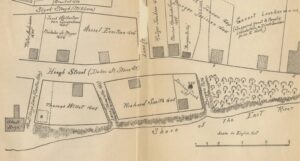
Map of the East River shore in 1655, Meyer’s house just north of Stadt Huys, J.H. Innes, 1902, New Amsterdam and Its People

Nicolaes De Meyer (Nicholas/Nicolaus/Nicol de Myer/Mayer/Mayor), Mayor 1676-1677: De Meyer (1635 –1691) was a merchant who participated in the fur trade. He also imported consumer goods and French wine from his contacts in Amsterdam.[1] 

His direct involvement in slavery:

  • The history book Root & Branch states that during the Dutch colonial period, “Nicholas de Mayer, Govert Loockermans, and Jacob Leisler obtained slaves to use in mills at the Fresh Water Pond adjacent to the ‘negro land.’”[2]
  • He purchased “1 negro” for 460 florins on May 29, 1664.[3]
  • In an April 21, 1675, Mayor’s Court case, Emanuell Mandeville sued “Nicol De Mayor” for detaining “a negro belonging to Major Kingsland.”[4] The enslaved man, named Arro or Arrow, was determined to be the property of Major Kingsland and De Meyer was ordered to deliver him along with court costs to Mandeville. De Meyer then appealed the case to the Court of Assizes, but that court also found that Arrow belonged to Major Kingston and De Meyer had to pay court costs.[5]
  • On April 30, 1680, Albany probate records state that Nicolaus De Meyer or Myer received satisfaction from Alexander Glen for a mortgage on “house, lot, lands, and slaves.”[6]
  • On March 7, 1683, the Court of Wiltwyck (later Ulster County) awarded De Meyer 500 schepels of wheat and two enslaved persons after a previous jury trial:

Roelof Swartwout Complt v.s. Wilhelmus DeMeyer, attorney for this father Nicolaes DeMeyer, Deft. Complt says that last year at an extraordinary session he has been ordered to immediately pay an obligation of about five hundred sch. of wheat, or immediate execution. Swartwout says that he has been obliged to his damage and ruin and sorrow to surrender two negroes for the sake of satisfying the sentence and paying the obligation for the purpose of preventing execution, amounting to four thousand eight hundred gldrs…Complaint is obliged to pay an obligation of 500 schepels of wheat; also to surrender two negroes.[7]
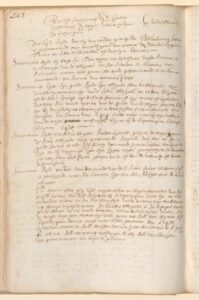
Swartwout v. De Meyer Court case (in Dutch), Ulster County Archives, NY Heritage

[1] Merchants & Empire, p.94; “Commerce and Community,” p.110

[2] Root & Branch, p.31; The iconography of Manhattan Island, 1498-1909…, Volume 2 p.308

[3] Documents Illustrative of the Slave Trade, Donnan, ed., p.428

[4] Minutes of the Mayor’s Court of New York, 16741-1675, ed. Kenneth Scott, p.37

[5] Records of the Court of Assizes for the colony of New York, 1665-1682, eds.Peter R. Christoph and Florence A. Christoph, p.157 and 180

[6] Index to the Public Records of the County of Albany, 1630-1894, Vol. V, FamilySearch, viewer p.83

[7] Ulster County Archives, Dutch court records of Wiltwyck 1661-1709, Ulster County Archives, Dutch Court Records Volume 6, p.243-244, English translation of  case

Copyright 2025 Paul Hortenstine
Francis Rombouts: 13th

Francis (Francoijs) Rombouts, Mayor 1679-80: Rombouts (1631 – 1691) owned a significant portion of what is today’s Dutchess County. He was a merchant who engaged in trade with Dover and London in goods and agricultural products.[1] He served in the Dutch government as a schepen (official who was an alderman and judge) in 1674 when they retook the colony from 1673 to 1674. 

In 1692, the enslaved people “a Negro man called Jacob” and “an Indian woman called Diana” are listed in an inventory of his estate, both worth £25:

Inventory [22 and 23 Jan, 1691/2] taken by Jacobus Kip, Johannis Outman, Theunis de Key and Rip Van Dam and exhibited on 17 Feb, 1691/2 by Helena Rombouts, Amount of estate was £1,131/10/8 and 3/4, Among items listed were a waistcoat with silver buttons, 2 pictures, a Negro man called Jacob [£25] and an Indian woman called Diana [£25], a picture, a Bible and a Psalm-Book [£1/16/-], a silver tankard, 2 silver beakers, 2 silver salt-cellars and 3 silver tumblers, wt, 61/4oz, 6dwt, [£20/17/-] and 3/4 of the ship Katharine now in Europe.[2]

In his May 1691 will, Rombouts outlined a condition for Diana to be sold:

…and Touching his Slave Diana Expressed in the [?] Conditions and kept without Commonage , is his Will and Desire , that the same by Title of Prelegate and before all Divisions shall bemaine in full Right , to his said Daughter Catharina , but with this Express Condition and Stipulation , in case my said wife after my decease will pay fifty Pounds currant money here to the Benefitt of his said Daughter , then she may Take her for it , and keep as her own , but otherwise and to the Contrary then the Sd Slave Diana is Presently to be sold , after his Decease , and the money accruing by her to come and to Remains to the benefitt of said Catharina Rombouts. [3]

On February 19, 1707, Rombouts wife, Helena, sold Diana and two other enslaved people—Alida and Sam—to Henry Tamball. From conveyance records:

Know all men by these presents that I Helena Rombouts of the City of New York Widow for and in consideration of one hundred pounds Current money of New York to me in hand paid by Henry Tamball of the same place Merchant the receipt whereof I do hereby acknowledge and myself therewith fully satisfied , Have bargained sold and delivered and by these presents in due form of law do bargain sell and deliver unto the said Henry Tamball one Indian woman called Diana one other Indian Woman called Alida one Negro boy called Sam five tables three pictures one old Dutch Bible one looking glass one cupboard four white linnen curtains a large Bean seales and weights eighteen old pewter plates two pewter dishes one large marble table three brass ketles one Jack and weights and two Spits all and singular which said premises hereby bargained and sold and now at the time of the sealing and delivery of these presents in my possession and in the house I now dwell in scituate in the broad way in the City of New York.[4]

[1] Merchants & Empire, p.79

[2]Prices of Enslaved Persons in New York and New Jersey.” Douma, Michael, Journal of Slavery and Data Preservation 4, no. 5 (2023): 67-75; Description from New York State Estate Inventory Abstracts, 1666 – 1825, NY Geneological and Biographical Society, link

[3] New York County Record of Wills 1684–1687, Vol. III & IV, viewer page 175, FamilySearch

[4] New York City Conveyance Records 1698–1701, 1701–1705, 1705–1712, image p.475, FamilySearch

Copyright 2025 Paul Hortenstine

Gabriel Minvielle: 16th

Sale of Catharina, Chrispina, and the child Marta, date unknown, Ulster County Archives

Gabriel Minvielle, Mayor 1684-1685: Minvielle (?-1698) was a merchant in the fur and Caribbean trades.[1]

In his will, dated March 8, 1698, Minvielle leaves to his wife, Susannah, “all my negro and white servants.” An enslaved woman named Isabella and “children of my Spanish Indian woman called Koffey” were to be freed after the death of his wife.[2]

On November 7, 1673, Minvielle demanded payment after failing to receive “a negro boy” in exchange for money and 855 pounds of Muscovado sugar. From court minutes:

Minviele by his atty Joh : Coderrie , arrestant and pltf . vs Wm Schackerly , deft . Pitf . demands from the deft . a negro boy according to agreement with fl . 69. 10 . and 855 lbs . of Muscovado sugar according to obligation . Deft . admits the debt , but has no opportunity to ship it hither in consequence of this change of government . The W. Court having heard the arguments on both sides and having examined the obligation and contract , decree and order , that in case no ship were permitted to come hither from Barbadoes within 12 months , the sale of the negro shall be annulled povided the deft . shall pay the pitf . the debt to the sum of fl . 717 , 10 zewant and 835 lbs . Muscovado deducting the freight and other expences , according to obligation ; also that the deft . shall enter sufficient security therefor and pay the costs herein incurred.[3]

A November 13, 1676, a mortgage states that Minvielle sold an enslaved man named Prince for three hundred schepels (1 schepel = 0.764 bushel of wheat) of wheat:

Appeared before me Wm LaMontagne, Secretary for the hon. court at Kingston, Wallrand Dumon who acknowledges to honestly and actually owe Mr Gabriel Minniville a quantity of three hundred sch. of good winter wheat to be paid in three payments or installments, all to be delivered free at the bank. Precisely hundred sch. of which are to be paid in March of the next year 1677, in [the month of] March following again hundred and fifty sch. of wheat , and in March of the year 1679 the remaining fifty sch. of wheat. All of which amount originates from the purchase of a negro named Prince. For the purpose of complying with the present the negro shall be mortgaged until the full and effective payment, and further person and effects, none excepted. Have subscribed to the present besides the below-named witnesses, this November 13, 1676 at Kingston. …[4]

On February 2, 1680, Gabriel Minvielle brought a case against “his Negro called Danielle for drawing his knife” against a “Burger of this Citty and rideing in a Cart contrary to the orders of this Citty, and several other Misdemeanors…” It was ordered that “the said Negro” have “forty Lashes at the Whipping post” and the plaintiff to pay costs. Francis Rombouts was mayor at this time.[5]

An April 12, 1680, mortgage states that Minvielle owned an enslaved child:

Be it Known by the present that before us the court at Kingston there has appeared Elisabet Hals widow of the deceased Mr Gorge Hall who admits to honestly and actually owe Mr Thoomas dLavall, to him, his order or heirs the amount of eight thousand seven hundred sixty eight gldrs received to her satisfaction by her deceased husband. Said Mrs Hals further admits to owe Mr Gabriel Minniville, merchant at N. Yorcke the amount of three thousand sixty gldrs and thirteen st. representing a quantity of five hundred and ten sch. of wheat three hundred sch. of which wheat she is to deliver free an N. Yorck the balance free on the river bank (strandt). Which debts to both creditors she will have to pay in one year after the date of the present in good merchantable wheat. Mrs Hals is yet to Keep the negro child, belonging to Mr Gabriel Miniville, for one year, and then to deliver the same to Mr Gabriel Minville at her own expense.[6]

On November 17, 1682, court finding reveals Minvielle exchanged an ox for an enslaved persons: “The hon. court finds, through a declaration, that the ox does not belong to Parrot, but that it is Minville’s ox, the same having been exchanged for a negro. (alsoo’t by ruylinge van een Neger).”[7]

Date unknown, Gabriel Minvielle sold two women and an enslaved child for 400 schepels of wheat. Their names were Catharina, Chrispina, and the child Marta.

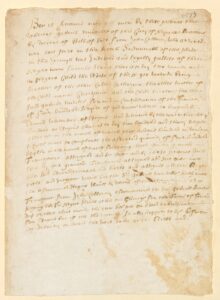
Bee it Known unto all men by these presents that whereas Gabriel Mienelle of this city of Nyorck, merchant, by virtue of Bill of sale from John Calloway who arrived into this port in the Ketch Susannahh of this place in the springh was Invested and legally possest of three Negero female slaves that is to say two women and a Negero Child the Eldest of the negro women being mother of the other called Catharina the other mother of the child named Chrispina and the child Marta. Hee the said Gabriel Minelle for and in consideration of the quantity of four hundred scheple of god winter wheate to bee paid by Edward Whittakar of Esoopus…[8]

[1] Merchants & Empire, p.76, 222

[2] Abstracts of Wills on File in the Surrogate’s Office, 1665-1801, Vol.1, p.339-340, found at FamilySearch, link

[3] Minutes of the Court of Burgomasters and Schepens of New Amsterdam, July 12, 1663 – May 1664, “New York City, New York, United States records,” FamilySearch, link, viewer image 17 of 196

[4] Ulster County Archives, Dutch court records of Wiltwyck 1661-1709, mortgage

[5] Select cases of the Mayor’s court of New York City, 1674-1784, p.742; FamilySearch

[6] Ulster County Archives, Dutch court records of Wiltwyck 1661-1709, mortgage

[7] Ulster County Archives, Dutch court records of Wiltwyck 1661-1709, court case

[8] Ulster County Archives, Dutch court records of Wiltwyck 1661-1709, sale record

Copyright 2025 Paul Hortenstine

Nicholas Bayard: 17th

Nicholas Bayard (Nicolaes Beijaert), Mayor 1685-1687: Bayard (c.1644 – 1707/9) was Peter Stuyvesant’s nephew and a colonel. The Bayard family intermarried with the Stuyvesant family and were one of the leading families of New Amsterdam.

Bayard was a merchant who engaged in the slave trade, fur trade, piracy with Madagascar, importing dry goods, and outfitting ships with provisions.[1] He invested in the slave ship Leonora and Leeuwinne with another mayor, Cornelius Steenwyck. From 1668 to 1669, it sailed from Textel, the Netherlands, to Ardra on the west coast of Africa. 147 captives were purchased and 126 survivors were sold into slavery on Curaçao. 

In the 1690’s he was a broker for Governor Fletcher in obtaining money from privateers for a license to trade.[2] Bayard was tried for treason in 1702, led mainly by Dutch settlers (including Abraham and Johannes De Peyster and David Provoost) because of Bayard’s opposition to Jacob Leisler and promotion of the legal case that led to Leisler’s execution. Bayard and his son, Samuel, were accused of circulating petitions criticizing the king. Bayard was found guilty and sentenced to death, but Lieutenant Governor John Nanfan pardoned Bayard.[3] Although Bayard was Dutch, he was becoming more English, including attending Trinity Church, and Leisler’s rebellion gathered support mainly from the poorer Dutch in the colony.

  • Nicholas Bayard recorded in his journal that as part of Leisler’s Rebellion, on June 26, 1689, “I was alsoo informed that a shott was made at my negro John, whilst he was at his labor in my owne yard, but that the bullet mist him, and hitt againe the stone wall, where it was taken up and brought to my wife.”[4]
  • In 1703, “Coll. Nich.” Bayard owned two adult enslaved men and one enslaved girl in his house in New York City. His will does not appear to mention slaves.[5]
  • In 1710, Bayard was involved in a protracted court proceeding over an estate of Mingo, an enslaved man. It is difficult to make out the handwriting and does not appear that Bayard was the enslaver of Mingo. Part of the case:

…appraisment of a Negra man love called Mingo in the hands of John Hongon the Parishes of the goods & Chattells of the Boats and have raged him to pity pounds & made Oath in Court that the same is a true and just appraisment to the best of their kill & Judgment upon Motion of Broughton and it is Ordered that the sum of Eight pounds of the goods & Chattells of the Defts in the hands of Hanson the Gore be condemned to the Jane Gothill according to the usage & Custom of said City…[6]

Nicholas “owned a considerable amount of land that included a large portion of the north side of Wall Street, land that had formerly been set aside by the West India Company as “Negro lots.’”[7] “By the close of the seventeenth century…Bayard was busy buying up land on the bowery, including lands that had been formerly owned by free Black families.”[8]

Elias Neau operated a school from 1703 until his death in 1722 for converting the enslaved to Christianity through the Anglican Church’s Society for the Propagation of the Gospel in Foreign Parts. Neau was a Huguenot refugee who came to Manhattan to pursue his ambitions as a merchant. Bayard had an enslaved person catechized by Neau.[9]

Slaveship Investment

Mayor Ship Dates of Voyage Ports of Call Enslaved Purchased Cargo Co-Investors
Nicholas Bayard and Cornelius Steenwyck  Leonora and Leeuwinne 1668-69 Textel, Ardra, Curaçao 147, 126 survived   Balthazar Stuyvesant

[1] Merchants & Empire, 53, 63, 81, 95, 147, 179, 222

[2] Documents Relative to the Colonial History of the State of New York, Vol. IV, pp.307-308, link

[3] “The Bayard Treason Trial: Dramatizing Anglo-Dutch Politics in Early Eighteenth-Century New York City,” Adrian Howe, William and Mary Quarterly, Vol. 47, No. 1 (Jan., 1990), pp. 57-89, https://www.jstor.org/stable/2938041

[4] Bayard Journal, June 11, 1689, Documents relative to the colonial history of the State of New York, Vol. III, p.604

[5] Northeast Slavery Records Index, in Conway, Rosanne: Lists of Inhabitants of Colonial New York, p. 33; New York Wills, Vol 008, 1710-1716, Will Date 9 May 1707, Probate Date Apr 1711, digital p.17-18, Ancestry.com

[6] New York City Mayor’s Court Trial Minutes, April 23, 1695 to September 12, 1704, image 533 and 538, FamilySearch

[7] “Bound by Bondage,” dissertation, Maskiell, p.46

[8] Bound by Bondage, p.89

[9] Liberty’s Chain: Slavery, Abolition, and the Jay Family of New York, p.17, footnote 15

Slaveship: 11781 and Bound by Bondage

Copyright 2025 Paul Hortenstine

Peter Delanoy: 19th

Peter Delanoy (Pieter De Lanoy or Delano), Mayor 1689-1691: Delanoy (d.1696) was a trader in fur and produce from regional markets.[1] Delanoy was elected during the rule of Jacob Leisler from 1689 to 1691 and was the only directly elected mayor until 1834.[2]

He left his wife Mary, [Mariette] “…the negerine Nanny” with all linen woolens and apparel for her body.  The will was in probate November 27, 1696, and it is very likely he died earlier in 1696. The Oxford English Dictionary states that negrine meant “A black woman; = negress n.” with a noted usage in 1703. It appears that he is a member of the Delano family of New York.[3]

On June 19, 1695, he wrote to the Lords of Trade about Governor Fletcher’s support of piracy: “We have a parcell of pirates in these parts which [people] call the Red-Sea men, who often get great bootys of Arabian Gold. His Excellency gives all due encouragement to these men, because they make all due acknowledgem’s to him; one Coats a captain of this honble order p’sented his Excellency with his ship, which his Excellency sold for £800. and every one of the crew made him a suitable p’sent of Arabian Gold for his protection…”[4] Caleb Heathcote bought the ship from Governor Fletcher.

[1] Merchants & Empire, p.90

[2] Gotham, p.99

[3] New York Wills and Probate Records, 1659-1999, vol 5-6, 1693-1707 p.103, FamilySearch

[4] Documents relative to the colonial history of the State of New York, Vol. IV, pp.223

Copyright 2025 Paul Hortenstine

William Merritt: 23rd

William Merritt, Mayor 1695–1698: Merritt (d.1708) owned four enslaved men, one enslaved woman, and three enslaved children (one boy and two girls) in his household in a 1702 census of Orange County, New York.

In an example of the precariousness of the lives of the enslaved, in 1696, Prince, an enslaved man, slapped Merritt on the face when the mayor tried to disband a noisy gathering [it is unclear if this is the same person who Gabriel Minvielle sold]. The next day, Prince was “stripped, tied to a cart, and dragged around the perimeter of the city.”[1]

[1] In the Shadow of Slavery, p.36; for his slaves: List of Inhabitants of Colonial New York, List of the Inhabitants in the County of Orange, 1702; Census of the counties of Orange, Dutches & Albany. 1702, 1714, 1720, link, Merritt Family History, link; The Memorial History of the City of New York, p.53-54 also has Merritt in Orange County

Copyright 2025 Paul Hortenstine

Johannes De Peyster: 24th

Johannes De Peyster II (de Peijster), Mayor 1698-1699: De Peyster (1666 – 1711) was a merchant who engaged in the sugar and tobacco trade.[1] He served in the Dutch government when they retook the colony from 1673 to 1674, as burgomaster (similar to mayor with two men holding the office) in 1673. 

In the c.1703 census, he had five enslaved people in his household in New York City. The last name is listed as “D’payster” in the East Ward where his brother lived.[2]

[1] Merchants & Empire, p.28

[2] Enumerations of Population in North America Prior to 1790, U.S. Census, p.24; Northeast Slavery Records Index

Copyright 2025 Paul Hortenstine

David Provoost: 25th

David Provoost (Provost), Mayor 1699-1700: Provoost (1670 – 1724) married Maria De Peyster (1659–1700) in January 1699, the sister of mayors Abraham and Johannes De Peyster. Provoost was an investor in the slave trade and a dry goods merchant.[1] In the c.1703 census, Provoost had three enslaved persons in his household in New York City, in the Dock Ward.[2]

Provoost invested in two ships that transported enslaved people from the Caribbean to New York City between 1719 and 1723. In July 1723, he sued the captain of the slave ship Expedition, which he was an investor in, for fifty pounds of damages to goods and the death of an enslaved girl from the shipment from Barbados that arrived between June 22 and June 27. The shipment was to be delivered to his daughter Belia, and Provoost charged that Captain Samuel Lawrence allowed Jenny to drown. She was from Barbados along with Joa, a boy.

The court judged Lawrence not guilty and Provoost had to pay his attorney costs of three pounds, nine shillings, nine pence, and three farthings. The cargo of the ship included “… Seventy one Hogsheads two Tieres & Eight Barrett of Rum three bail of Cotton , five – Large bag of Cocoa one Negro girl slave named Jenny & a Negro boy Slave named Joa…” Provoost alleged that:

Paid unto him the said Samuel freight for the goods and merchandises aforesaid, nevertheless the said Samuel his promise, an assumption aforesaid in form aforesaid made little regarding but imagining and fraudulently intending him the said David in his behalf craftily, and subtly to deceive and defraud the or aforesaid negro girl called Jenny part of the goods and merchandises aforesaid in such good order and well-conditioned as the same negro girl slave was at the time of the delivery and loading the same in and upon the brigantine unto the said Belia Provoost of her assigns hath not delivered but the same negro girl slave so negligently and improvidently kept carried and disposed that the said negro girl slave of the value of forty pounds through the negligence and carelessness of him the said Samuel and his mariners in landing her at the port of New York the 27th day of June in the year aforesaid into the water did fall and into the water for a long time remained. By means whereof the said negro girl slave in four hours after died to wit…[3]

In his October 10, 1723 will, Provoost left his daughter Belia (Belitje) an enslaved woman named Jane. He wrote:

I give and bequeath to my Eldest Daughter Belia Provoost before any division or dividend shall be made I give her the sum of one hundred pounds Currant money of New York and the three Lots of Land by me some time ago Bought from Johannes Beekman Lying In the Suburbs of the City of New York as may at Large appear by the writings thereof to me made. I also I give to her all my houshold stuff as wrought Silver plate pewter pictures Bedding Chairs Looking Glasses Clock Chest of Drawers Jane the Negro wench Copper Brass Iron and all and every Thing Else belonging to me in my houshold at present all what is above Exprest to be given to my daughter I give to her my said Eldest daughter…[4]

Investments in Ships that Transported Enslaved

Ship Dates of Voyage or in NY Port Ports of Call Enslaved Purchased Cargo Co-Investors
Mary 6/18/1719 Barbados 6 Rum Abraham Van Horne (his brother-in-law)
Expedition 4/4/1720 Barbados 5 138 casks rum, lime juice, four casks iron, European goods Col. William Provost (his brother) and Abraham Van Horne (their brother-in law)
Expedition 8/8/1720 Barbados 5 Rum, sugar, molasses, iron, European goods Col. William Provost (his brother) and Abraham Van Horne (their brother-in law)
Expedition 4/18/1721 Barbados 5 European goods, rum, sugar, soap, iron Col. William Provost (his brother) and Abraham Van Horne (their brother-in law)
Expedition 7/31/1721 Barbados 15 Rum Col. William Provost (his brother) and Abraham Van Horne (their brother-in law)
Expedition 10/21/1721 Barbados 9 None listed Col. William Provost (his brother) and Abraham Van Horne (their brother-in law)
Expedition 6/22/1723 Barbados 5 Sugar, three bags cotton wool, five bags of coconuts, one horse Col. William Provost (his brother) and Abraham Van Horne (their brother-in law)

[1] Merchants & Empire, p.421

[2] Enumerations of Population in North America Prior to 1790, U.S. Census,p.31

[3] New York City Transcripts of Mayor’s Court 1723-1728, image 324; and Select cases of the Mayor’s court of New York City, 1674-1784, Vol. II, Page viewer 375, both in FamilySearch; also in dataset of Douma, Michael. “Prices of Enslaved Persons in New York and New Jersey.” Journal of Slavery and Data Preservation 4, no. 5 (2023): 67-75

[4] New York County Wills 1724–1728, image 45 of 272, FamilySearch; also in an estate inventory taken in 1725, New York County Guardianship Inventories, image 29 of 718, FamilySearch; will was in probate on January 27, 1724

Ship investments: #107376, Donnan p.469, CO 5/1222_05, 208; #107383, p.470, CO 5/1222_05, 221; #107398; p.471, CO 5/1222_05, 228; #107410, p.472, CO 5/1222_06, 254; #107436, CO 5/1222_06, 259; #107440, p.473; CO 5/1222_06, 262; #107464, p.474; CO 5/1223_02, 33

Copyright 2025 Paul Hortenstine

Isaac de Riemer: 26th

Isaac de Riemer, Mayor 1700-1701: de Riemer (c.1666 – c.1731) was a prominent merchant and glazier. Mayor Cornelius Steenwyck was his uncle. His father, Peter De Riemer, left him half of his glasswork tools in his will. In his 1731 will in Somerset County, New Jersey, he lists six enslaved persons: Dean, Florah, Hagg, Harry, Joan, and Thom.[1]

[1] Northeast Slavery Records Index; De Riemer, William Edward (1905). The De Riemer family, A.D. 1640(?)-1903, p.15-19; Documents Relating to the Colonial History of New Jersey, First Series, Vol. XXX: Calendar of New Jersey Wills, Vol. II: 1730-1750, p.141; father’s will: New York, U.S., Wills and Probate Records, 1659-1999, Will Date 29 Jan 1690, Probate Date 29 Jan 1697, Wills, Vol 007, 1702-1704, Ancestry.com, link

Copyright 2025 Paul Hortenstine

Thomas Noell: 27th

Thomas Noell, Mayor 1701–1702: Noell (d.1702) was mayor when the comprehensive slave code for the province of New York was enacted in 1702. He listed ten enslaved persons in his will that was executed in April 1704. From an abstract of his will:

Inventory [3 April 1704] of goods on his farm in Bergen Co,, No J. Among items listed were the following Negroes: a man named Robben [£36], a man named John [£44], a boy named Jack [£40], a woman named Vilet [£32/10/-], a woman named Mercey [£32/10-], a boy named Robben [£20], a boy named Clase [£10], a girl named Izabell [£20], a girl named Hannah [£15] and a girl named Susannah, at the half [£5]o The total was £341/-/6…The inventories were exhibited on 13 April 1704 by Hannah Noell, widow and executrix of the dec’d…[1]

[1] New York State Estate Inventory Abstracts, 1666 – 1825, NY Genealogical and Biographical Society, also in Abstracts of wills on file in the Surrogate’s Office, City of New York, 1665-1801. V. 1, FamilySearch

Copyright 2025 Paul Hortenstine
